About Me

My photo
I'm an Aussie who likes wandering all over the world but keeps coming back home to paradise and my family. If you are reading this on one of my travel blogs, I hope you enjoy reading them as much as I enjoyed creating them. If you are reading the Diabetes and weight loss blog - I hope it helps in your battle with the beast. Cheers, Alan
Showing posts with label Information. Show all posts

Saturday, January 27, 2018

Money, Cards, ATMs and Cash For Travels


Revised and up-dated, replacing the post of May 04 2011.

One of the most frequent questions asked on travel forums is "how much foreign currency should I obtain before I leave home" and "how much should I purchase in Traveller's Cheques". My answers are "as little as possible" and "nothing". Instead, join the 21st Century and use ATMs (Automatic Teller Machines) wherever possible.

Most of my trips involve several countries and many different currencies. For example, my 2011 seven-week trip used in sequence the Malaysian Ringgit, Indian Rupee, Malaysian Ringgit, £, €, Swiss Franc, €, Croatian Kuna, BiH Marka, Russian Rouble, £, Malaysian Ringgit and finally home again, with much of the pre-purchasing using US$. My 2016 rtw trip used in sequence the Malaysian Ringgit, Indian Rupee, €, Albanian Lek, £, Norwegian krone, Swedish krona, Danish krone, €, Cuban peso, $Canadian and $US. Fun :)

Pre-trip planning

My primary card overseas is a debit card suitable for use in overseas ATMs. I choose to use a debit card because credit cards can add significant fees and use poor exchange rates.

Possibly the most important pre-trip requirement is to find a bank which provides a suitable debit card. That will vary by country. As an Australian I found our local major banks added excessive fees when using foreign ATMs on my overseas trips. They also added a hidden fee by using exchange rates 2% or more worse than the actual rate. I searched until I found a bank offering a fee-free account, including no fees using foreign ATMs. Their effective fee is the difference between the real exchange rate and the bank's rate. With this bank that is usually about 1% (I use www.xe.com for comparisons). I load the account before trips with sufficient cash plus a safety reserve and adjust when I get home.

Another advantage of a debit card is security. If it is stolen or misused the amount risked is limited by the cash balance.

I very rarely use overpriced currency exchangers before departing unless I have a need for a specific non-local currency on arrival. For example, I had to pay cash for my apartment in Buenos Aires in US$; I could not get that out of the local ATM and bought it before departure instead. Similarly, when I visited Myanmar in 2012 the government exchange agency in Yangon Airport demanded pristine $US, excluding some serial numbers. I had to arrange that in advance before I left Australia. Expect a cost in excess of 5% using foreign currency dealers.

I do a lot of on-line pre-purchasing of hotel rooms and other services. I don't usually book every night of a trip, but at least the first night after travel. I do not want to be hunting for a place to sleep as I get out of the airport or station jet-lagged or travel-weary. Often the cheapest rate requires full payment but cannot be cancelled. That has the added advantage of locking in the exchange rate of that day if you think it may drop in the future (see my later comment on forex). Some sites convert to my currency for the purchase at their own exchange rate, which can be surprisingly good, so the debit arrives my bank in AU$ with no fees.

If I use my credit card for pre-purchases I also need to carry the card on the trip because some airlines and hotels require the booking card for verification at check-in. Use of the credit card may give me free travel insurance in certain circumstances. Its other use is as my emergency backup if my debit cards are lost, stolen or not accepted.

Heading Out

I always carry a minimum of three cards for redundancy. If you carry only one card, loss or theft or cancellation could be a disaster. It doesn't need to be stolen to have a drama. On our first trip the bank officer handling our account left to have a baby and neglected to arrange automatic monthly credit card payment from our primary account. It maxed out; we discovered that courtesy of a cranky non-English-speaking (and why should she?) French supermarket check-out girl in front of a long and increasingly grumpy queue. The back-up card saved the day – and the rest of that month and my sanity.

The three cards are on different accounts; if one is cancelled the others are still OK. My primary is a debit Mastercard, with a Visa credit card and Visa debit card as backups.

Another reason for backup cards is variability of ATMs. In some countries not every ATM will work with every card, even if the appropriate symbol appears. I once tried all of my cards at six different bank ATMs in Rio before I found one that worked. I had similar difficulties in Buenos Aires and China. But I always eventually found one which worked.

While travelling I keep only my ready-use local cash and primary debit card in my ordinary wallet in my front trousers pocket. For vital documents and my emergency stash I use a Go “secret wallet” which hangs off my belt inside my trousers. I store the essentials in that: my passport, the credit card, backup debit card, spare passport photos and cash in the form of approximately €200 or US$200 in modest bills depending on the region.

Cash on Arrival

I assess my likely need for cash when I arrive in the country and head straight for an ATM at the airport, rail station or nearest border town (if driving) which will accept my debit Mastercard or backup Visa debit card.

Many overseas ATMs charge a fee for service on top of any fee your own bank charges. If there is more than one ATM available check whether a fee applies; if so check the other ATMs for better value if possible. Major local bank ATMs are more likely to be fee-free - but not always.

I only withdraw sufficient in local currency for three or four days, replenishing as necessary, and try to budget so that I arrive at the border on departure with just enough to buy coffee or a meal or duty-free goods on the air side of the security barrier. If I'm driving I usually turn any remaining cash into fuel at the last gas station before the border.

Sometimes it may be necessary to allow for a lack of ATMs if heading into rural districts but I can only recall a couple of times I needed to do that. For the rare times times when there is no ATM I have my "secret" reserve for emergencies of €200 or US$200. One of those two currencies is usually accepted as an alternative, although sometimes the locals use very flexible exchange rates.

Where possible I pay for hotels and other major costs with the debit card. That minimises the amount of local cash I need to carry and has the dual benefit of reducing my security risks and limiting the amount of cash I may need to re-convert as I cross a border to another new currency. However, local cash is always going to get the best price when in markets or for other general purchases.

Heading Home

Unused foreign cash is not always a problem but sometimes it can be costly. Minor border crossings where the locals frequently cross over can have excellent cheap currency exchanges; I have used those in Eastern Europe successfully. But others do not. We lost over 10% converting Swiss Francs to Euros in a French bank near the border. Banks back in Australia charge like wounded bulls for turning foreign notes back into Aussie dollars and will not even look at foreign coins. Back in '03 we didn't know that; we came home with about £40 in coins, which is easy to do with £1 and £2 coins, worth about AU$100 at that time. The bank would not accept them. We spent them on our return to the UK in '06. Today they would be worth $70.

A word of caution.

Trying to predict future exchange rates can be risky. After seeing the Aussie dollar range from as low as US$0.55 to US$1.10 (it is now approximately US$0.80) since 2003 when I went on my first rtw trip I decided I am a wanderer, not a forex trader. Be careful of cards advertised for travellers which lock in an exchange rate when you deposit cash to them. Those rates can move in both directions.

Finally, always remember to get your card out of the machine when you finish. I lost a card that way in Argentina. I take extra care these days to look for the final "are you finished" request, not always in English, if the machine is the type that swallows my card.

Cheers, Alan, Australia


Monday, December 07, 2015

For Lovers of Train Travel


I was pondering past travels last night and realised I had never collected all the train trips together. I will continue Sri Lanka reports soon but decided to write this while it is fresh in my mind.

I grew up in the mid-20th century in New South Wales, Australia when air travel was a rare luxury and rail was the only economical way for us to travel to visit a far-flung family. Christmases were spent in Narrabri, a day and a night to the west via three trains, where Grandfather's house was near the station and I spent hours watching the wheat and other goods trains being shunted in the yards.

I loved those trips, back in an era when steam was king and diesel was new. Clickety clack, clickety clack unendingly lulling me to sleep despite the discomfort of seats not designed to be slept in. Opening the window on warm nights and feeling the breeze, then the unheralded sudden darkness and soot in my face as we entered a tunnel at speed with Mum yelling at me to shut the window, the doppler tolling of warning bells as we passed road crossings, the rush to the counter at Railroad Refreshment Rooms to be sure to be served before the train moved on, seeing the beautiful but sometimes harsh countryside of my native land passing by.

In the '60s I joined the RAAF as an apprentice and received travel warrants for visits by train on leave twice annually to home, 2000km to the north. Two nights and a day each way, coach class.

Next year I am planning another short 'round the world trip. I have already booked The Canadian across the Rockies from Vancouver to Edmonton, followed by the Coast Starlight down the US West Coast from Seattle to Los Angeles. Before Canada I intend wandering Tamil Nadu, Norway, Sweden, Denmark and Cuba by train; all brief visits but spending time in trains in each of those countries.     

I had not realised how much train travel was in my blood until, during the planning for my next trip, I looked back and listed many of the world's great train journeys included in my travels over the years. Whenever I had to make a choice between air and rail, the train always won unless time made it totally impractical.

Links to trip reports are highlighted where appropriate. Some are detailed reports of the trip, some include mention of several trips and a few mention the train trip as part of the report on a city or region.

1950s and '60s. Australia, multiple times on these routes, including returns: 
  • Grafton > Sydney or Newcastle (North Coast Mail)
  • Newcastle > Werris Creek
  • Werris Creek > Narrabri (Motor Rail)
  • Inverell > Moree > Narrabri
  • Sydney > Melbourne (Spirit of Progress, Southern Aurora, Intercapital Daylight)
  • Grafton > Brisbane
1970s-2003    Worked for a living…        
2003    Spain    Madrid > Granada
2004    Australia    Murwillumbah > Sydney Lament for a lost line.
2006    USA    NYC Penn > Buffalo      
2008    Egypt    Cairo > Aswan
2010    USA   Washington DC > New York City      
  “  “    Peru    Puno > Cusco    Andean Explorer
  “  “    Peru    Piscacucho > Machu Picchu    Vistadome          
2011    UK    Stansted > London    Stansted Express  
  “  “    UK – France    London > Paris    Eurostar
  “  “    France    Paris > Lausanne    Lyria TGV  
  “  “    France – Switzerland    Lausanne > Visp
  “  “    Switzerland    Visp > Zermatt          
  “  “    Switzerland    Zermatt > Gornergrat Gornergrat Bahn
  “  “    Switzerland    Zermatt > Chur    Glacier Express
  “  “    Switzerland    Chur > Tirano    Bernina Express
  “  “    Italy    Tirano > Milan
  “  “    Italy    Milan > Venice      
  “  “    Italy - Croatia    Venice > Zagreb
  “  “    Bosnia and Herzegovina    Mostar > Sarajevo
  “  “    UK    London > Ipswich      
2012    China (report is on all China train trips below)    
  “  “    Hangzhou > Shanghai G 300km/hr
  “  “    China    Shanghai > Suzhou    K 140km/hr  
  “  “    China    Suzhou > Beijing    G 300km/hr  
  “  “    China    Beijing > Zhengzhou    D 220km/hr  
  “  “    China    Zhengzhou > Xi'An    G 300km/hr  
  “  “    Myanmar (Burma)    Thazi > Kalaw
2013    France    Paris > Hendaye
  “  “    Spain – Portugal    Irun > Lisbon    Trenhotel
  “  “    Portugal – Spain    Lisbon > Madrid    Trenhotel
  “  “    Spain    Madrid > Cordoba
  “  “    Spain    Cordoba > Algeciras
  “  “    Morocco    Tangier > Fes
  “  “    Morocco    Fes > Meknes
  “  “    Morocco    Meknes > Casablanca
2015    Sri Lanka    Colombo > Ella
  “  “    Sri Lanka    Anuradhapura > Colombo
2016    India    Tiruchirappalli > Thanjavor
  “  “    Norway    Bergen > Voss
  “  “    Norway    Flam > Myrdal
  “  “    Norway    Myrdal > Oslo
  “  “    Norway – Sweden    Oslo > Gothenburg
  “  “    Sweden – Denmark    Gothenburg > Copenhagen
  “  “    Cuba    Matanzas > Havana (Hershey Train)
  “  “    Canada    Vancouver > Edmonton
  “  “    USA   Seattle > Los Angeles (Coast Starlight)
2017    South Africa    Johannesburg > Port Elizabeth
  “  “    South Africa    Cape Town > Johannesburg
2018    Lithuania    Vilnius > Kaunas
  “  “    Lithuania – Poland    Kaunas > Bialystok
  “  “    Poland    Bialystok > Warsaw
  “  “    Poland – Germany    Warsaw > Berlin
  “  “    Germany    Berlin > Cologne
  “  “    Germany > France    Cologne > Paris
2019    Vietnam Reunification Express Da Nang >  Hanoi
  “  “    Japan    Osaka KIX > Osaka Namba
  “  “    Japan    Namba > Nara
  “  “    Japan    Nara > Kyoto
  “  “    Japan    Kyoto > Hiroshima
  “  “    Japan    Hiroshima > Himeji
  “  “    Japan    Himeji > Nagoya
  “  “    Japan    Takayama > Toyama
  “  “    Japan    Toyama > Tokyo
  “  “     Uzbekistan   Tashkent > Samarkand (Afrosiyob)
  “  “     Uzbekistan   Samarkand > Bukhara (Afrosiyob)
  “  “     Uzbekistan   Bukhara > Khiva
  “  “     Uzbekistan   Khiva > Tashkent (night train)
  “  “     Uzbekistan to Kazakhstan   Tashkent > Turkestan (night train) 
  “  “     Kazakhstan   Turkestan > Shymkent
  “  “     Kazakhstan   Shymkent > Taraz
  “  “     Kazakhstan   Taraz > Almaty (night train)
  2023  Malaysia Kuala Lumpur > Taiping
  “  “    Malaysia Taiping > Butterworth
  “  “    New Zealand   Greymouth > Christchurch (Tranzalpine)
  “  “    New Zealand   Christchurch > Picton (Coastal Pacific)
  “  “    New Zealand   Wellington > Hamilton (Northern Explorer)
  “  “    New Zealand   Hamilton > Auckland (Northern Explorer)

I have also travelled on the local transit metros, trams and buses in almost every city I have visited, but I'll leave those for another post.

Cheers, Alan, Australia

Wednesday, June 24, 2015

Travel Safely: Food and Drinks.

These are habits and practices I have developed over the years as I wander the world as a senior with interesting blood.

I am a wanderer, not a doctor. Some of my ideas may not be suitable for you; select those which suit you and ignore those which don't. 

Water

Your body is used to your local water and your local bugs. I rarely stay in a country long enough to let my body acclimatise to its different bugs so I do not drink the local water. That does not just apply in the third world. I did not get Delhi Belly in India or Montezuma's Curse in Mexico but I did suffer from it in Cairo, Hong Kong, Peru and Texas.

I keep it simple. I buy bottled water with an unbroken seal. That has been available everywhere I have been in fifty countries and has never let me down. Some people use water filters. I do not. That is partly because they can be awkward to carry and use, but mainly because I can never be sure they are removing all the local bugs. Only if bottled water is not available in a remote area would I take a filter.

For fresh drinking water I only let bottled water pass my lips; that includes brushing my teeth and keeping my mouth shut in the shower.

Alcohol

I enjoy trying local beers and wines as I travel but I take care not to get drunk. It isn't worth the risk to me; not just to my health but also for security. It is too easy to become a sucker or a victim when judgement is impaired by alcohol. 

As long as I observe that precaution I have never had health problems from drinking local brews or vintages; in fact beer is usually a good choice in tropical climates instead of the local water. I occasionally find local wines which would better serve as paint stripper but more often they are quite good.

I avoid ice in my mixed drinks or soft drinks unless I can be certain it is made from clean water.

As a lateral issue, before you open the water bottles in your hotel room double check whether they are complimentary. If there is a charge you will nearly always find a shop nearby selling water for a fraction of the hotel price.

Tea and coffee.

I do not avoid tea and coffee brewed from the local water. I presume the water has been boiled long enough to kill any bugs. So far that policy has worked for me.

Vegetables and Meats

I avoid fresh washed salad vegetables when travelling in places with questionable water. The water the vegetables are washed in may be more dangerous than the dirt washed off. I stick to well-cooked vegetables unless I washed the salad thoroughly myself with bottled water. On the rare occasions I decide to break that rule I try a small experimental portion at dinner and don't repeat it until I find my internal plumbing is in good working order the following morning.

When choosing cooked foods I always make sure soups and stews are well cooked and my meats are always well done. I like medium rare at home, but do not risk it when I'm overseas.

I often eat in the restaurants chosen by the locals rather than those intended for tourists but I use some common sense when doing so, looking at the general hygiene and cleanliness of the place before I order. I accept different standards in the third world.  Only once have I regretted a local choice. 

In every one of the four cases of traveller's curse I suffered I was able to identify the cause. Each time it was from carelessness with foods, usually salads or fruit. My rule for fruit these days is to only eat fruit I peeled myself.

When Mistakes Occur

I carry prescription Norfloxacin with me. It is a strong medication with possible side effects and should only be used if prescribed by your doctor. For me it is a magic pill when the traveller's curse appears. One pill is usually enough. On one occasion (Nasca, Peru) I took two but I would never exceed that dose. Discuss that with your doctor before your travels. 

Cheers, Alan

Health and Safety While Travelling

This is an index page for several posts on health, security and associated subjects.


Cheers, Alan

Saturday, May 05, 2012

Bartering and Haggling in Foreign Lands

I'm preparing several blog posts at the moment to complete my trip to Asia and Europe last year before adding more posts on my recent trip to China. I have lots of photos to upload; expect the new posts to start appearing shortly.

In the meantime I thought this may be an opportune moment to add a post to my Travel Tips.


Street market in Yangshuo, China
One of the fun parts of travelling in exotic lands is wandering and buying in street markets. Very quickly you learn that prices are, to say the least, flexible. I've read a lot of tips on haggling with market vendors when preparing for my travels over the years, but in hindsight I was always too much the Aussie nice guy; never tough or ruthless enough. It is a bit deflating when you think you got the best price for something after a bargaining session with a market trader to then see it cheaper, and better quality, later on in a local supermarket or duty-free store. Particularly when your wife is the one who notices.

Prior to my latest trip I learned some effective techniques from the wise people who post on the reddit sub-group r/china and tried them in China and Malaysia. I was quite surprised to see how well they worked.
  • Always choose a market where there are many vendors, so that it is easy to walk on to a new seller if you don't succeed with the first. The same applies to tuk-tuks or autorickshaws; select from a group when possible so that others can join the negotiations and offer lower rates.
  • Take some time to choose your goods and don't look too excited or interested. Be fussy; look at quality. The goods will probably be fakes but that doesn't mean they are necessarily poor quality. When you find what you want, ask the price.
  • Look in open astonished wonder at the first numbers punched on the ready-to-hand calculator for haggling with laowai (foreigners) but don't be offended that the trader thinks you are silly enough to pay that much.
  • Punch in less than 20% of the asking price. Insensitively ignore the wail of anguish and haggard look of "you're stealing the food from the mouth of my baby" (only one allowed in China) and watch the numbers come down to half the original or less on the calculator. If the vendor appears truly offended, apologise profusely and walk on to the next stall. Now you know to go a little higher next time. You may also get a surprise at the new price offered as you walk away.
  • Go back and forth on the price offers until the vendor appears to have reached rock bottom. Then still offer less.
  • When the vendor eventually refuses to go lower, walk on. If the vendor lets me go, I now know the real price for the next stall in the market. But usually I'm not let go and the vendor chases me calling out successively lower prices (suddenly they seem to know numbers in English) until I might, reluctantly, accept one.
Petaling Street, Chinatown, Kuala Lumpur, Malaysia
Later, if you see the same item in a regular store check the price and hope it is higher than you actually paid. It always was for me this time, but not always in the past. It can help if you see it in a store before you go to the market, so that you know the regular retail price.

Using that technique in China and Malaysia I rarely paid more than 30% of the original asking price and always less than the store price. I based the store price on known fake copies, not genuine designer brands, because that is almost certainly what you get in street markets. I also felt no guilt, because invariably after the deal was struck and the cash paid the vendors were smiling and happy; possibly that means I still paid too much, but when both parties are happy that seems like a win/win to me. By the way - cash counts. Street market vendors rarely take credit cards and the rare few who do won't drop the price very much when cards are involved.

One of the differences when I was buying goods in China is that I was reasonably sure that was where they were made, along with souvenirs for most of the other tourist countries in the world. If you buy a fluffy Koala in Australia or Alpaca in Peru, guess where it was probably made.

Among other things after this trip I now have a $3 Casio digital watch (it was cheaper than a new battery for my old one) and some nice silk YStL and Hugo Boss shirts that cost $6 each. Well, at least the silk feels genuine; I learned how to tell on my unwanted (it reduced the tour cost) but interesting detour to the silk factory en-route to the Great Wall. My wife also has a lovely large $20 Chloé leather handbag. However, I suspect that neither Casio, Yves St Laurent, Hugo Boss, nor Chloé are getting a cut from those sales.

And always smile when you're bargaining - apart from your looks of consternation at the prices offered. Keep it friendly; it makes a difference.

Happy haggling.

Cheers, Alan

Friday, April 15, 2011

Where Do You Want To Go and What Do You Want To Do and See?


For some travellers those questions are irrelevant. You know why you are travelling because you are meeting a specific need. Whether it is for business or personal reasons, to attend a conference or your great-aunt's funeral, you know where you are going and what you intend to do. But for others, such as leisure travellers like myself, the question can be very important.

How detailed your planning should be will also vary. For some trips you don't need to plan at all. If you are heading off for the umpteenth time to see a regular customer or a relative you are fond of, you may not need to do more than throw some toiletries and spare undies in your briefcase, buy the tickets and call a cab to the station or the airport. If you are going to stay a week in a city you have never visited you probably need to do a little more planning and packing, but not a lot. Possibly all you would need to do is some reading on the city and its sights and culture, then choose a suitable location and accommodation. After that, buy the tickets, pack, call the cab and you are on your way.

But I tend to go on trips a little more complex than that. When I started planning my first 'round-the-world trip in 2002 my goal was very basic. I thought at that time that I had one single chance to see the world and I was going to see as much as I could for as long as I could afford. Consequently in 2003 we spent a month in the USA, visiting fourteen states by air and car, a few days in the Caribbean and four months seeing most of Western Europe and the British Isles.

We had a wonderful time, despite cramming such an enormous range of territory, languages, cultures and currencies into a short five months. I rarely felt rushed, threatened or stressed. I believe the detailed planning I did made the difference between enjoyment and disaster. I took over a year to make the plans and learned a lot by trial and error. I discovered something that surprised me along the way. I enjoyed the planning process almost as much as the trip.

I surprised the doctors and found I was still around after that trip so I decided to keep travelling until I couldn't. And I'm still travelling, nine years later.

The trips since then have been a little shorter. We went 'round-the-world again in 2006 for three months. Unfortunately, Australia is a long, long flight from anywhere in the Northern Hemisphere; we are simply too far from the rest of the world after my wife found that long plane trips were not good for her health. I went alone on the third 'round-the-world in 2008 and last year to South America; both were over seven weeks. In between those we travelled together on shorter flights to New Zealand, Fiji and New Caledonia for one or two weeks and regularly to Melbourne, Australia by road to see our family. We used that trip, 2000km each way, to see as much of South-Eastern Australia as we could by varying the route as much as possible each time.

Over that period I developed some basic techniques for the planning of my complex trips. Possibly some of them may help you plan yours.

The most basic of all questions, before you book anything at all, is where do you want to go and what do you want to see?

There are lots of factors you need to consider as part of those questions. If you are ready to head off to explore foreign lands, how foreign do you want them to be? Are you looking for a comfortable 5 star holiday in a culture not too different from your own, but in a pleasant and care-free climate? Or are you looking for exotic experiences, strange languages and interesting foods and don't mind a little discomfort along the way? Do you want to see old and historic ruins, ancient sites, beautiful countryside, or a modern vibrant metropolis? Or all of the above?

Work out those priorities first, because some of them may become mutually exclusive. Make sure you involve your partner. You don't want to discover your partner is only prepared to stay at the Hilton when you arrive at the youth hostel you pre-booked for a week, no matter how beautiful the view is or how delicious the breakfast may be.

I'll use myself as an example, but you must use your own interests and passions to decide which countries and cultures are the ones you want to visit.

Over time my focus on trips changed. The first one was based on “I want to see it all while I can”. Of course, it wasn't possible but we certainly saw a great deal; ancient and medieval, bucolic and modern. My next trip was more focussed on the cultures of Eastern Europe; I was particularly interested in the ways countries like Slovenia, Hungary, Slovakia, Poland and East Germany were recovering from the communist era. On my next two trips I made a conscious effort to see most of the great wonders of the ancient and natural world that I had not already seen, so I added Angkor Wat, the Taj Mahal, Petra, Ancient Egypt, Yucatan, Teotihuacan, the Nazca Lines, Lake Titicaca, Macchu Pichu, Colca Canyon, Galapagos Islands and Iguazu Falls to the wonders of Europe and North America that I had already seen. They became my “Wonders of the World” trips – but I also managed to include re-visits to some of my favourite places such as London, New York and Hawaii.

The trip I am planning at the moment is on a few levels. I love travelling by rail, so I have deliberately planned many long rail trips; some fast and modern, some more venerable. In one brief 14-day period I will take the Stansted Express to London, to catch the Eurostar to Paris, then after a few days the Lyria TGV high-speed train to Visp, connecting on a local to Zermatt, then the Glacier Express to Chur followed by the Bernina Express to Tirano. I change trains there for a local to Milan, then a local to Venice followed by the night train to Zagreb. Whew!!. And I'm going to love every minute of it. I won't be finished there because after flying to Dubrovnik I take the bus to Mostar and the train from there to Sarajevo.

I will have a second focus on this trip: food. I enjoyed eating local foods with the locals on many of my previous trips, especially in Mexico, Peru and Ecuador. I deliberately avoid the tourist restaurants when I can. I intend to do that as much as I can on this next trip, especially in Kerala, India and in Croatia and Bosnia and Herzegovina. On every trip I try to combine seeing new places, thus Kerala, the Balkans and Russia, with seeing old favourites and friends; in this case those are in the UK.

Do you have a passion? Art? Ancient cities and cultures? Medieval forts? Architecture? Foreign languages? Battles of WWII? Whatever your passion, consider basing a trip around that. That does not mean that is all you do or see on your trip, but it gives an additional interest and structure to your planning.

Once you have worked that part out, decide on the next two most important decisions. How long do you want to go for and what is your budget? Actually, the latter is probably the priority, because that may decide the time limit as well.

Cheers, Alan

Travel Tips Index

As I write later posts I will return to up-date and improve this index. This initial index is a list of intended posts, but it may change as I write them and think of other things to include,
If you can't click on it, then it hasn't been written yet. As of right now - that means none at all :) Watch this space.

Planning
Where Do You Want To Go and What Do You Want To Do and See?
Using a Spread Sheet
Managing emails
Travel Folders

Packing

Luggage: Checking Bags or Carry-on only?
Wallets - Secret and Normal
Clothing
Toiletries
First Aid and Medications
Electrics
Essential Extras
Packing Summary

Security

Basics
Airports

Money

Money, Cards, ATMs and Cash For Travels replaces:
Travel, Money, Cards and Cheques in Foreign Lands 

Booking via your computer
Hotels and Hostels
Airlines
Rail

Food

Avoiding Delhi Belly or Montezuma'a Curse
Travelling on a Diet
Eating with the locals

Trains

For Lovers of Train Travel


To be expanded.
Cheers, Alan

Saturday, April 09, 2011

Travel Tips From a Peripatetic Wanderer


G'day All

I have been relatively immobile over the past year since I returned from South America, restricting my travels to a few brief trips to see our family 2000km to the south in Melbourne, Victoria. This pause, before I head off to Europe and Russia via India in May, seems an opportune time to pass on some hints and tips based on my experiences to any readers interested in travelling the world .

This introduces a short series of Travel Tips which I intend to write over the next few weeks. I will commence with an index in the next blog post and then start the series with the basic packing essentials, expanded by following posts. As it develops I intend to follow with posts on booking hotels, buses, rail and flights via the web, planning complex itineraries, deciding on what to see and how long to stay and various other items as they come to mind. I will link each post back to that index.

You are probably wondering what qualifies me to do this? Well, no formal qualifications at all. Just some experience. You may have totally different travel likes and dislikes; so feel free to treat my ideas as a smorgasbord. Use any idea you think may help you, ignore what you dislike. It won't bother me much either way because I'm really writing this for my own satisfaction.

What experience, I hear you cry? Well, apart from the TA map at the foot, here are a few statistics to set the scene.

Countries

Some I have spent weeks in (USA, UK, Eire and a few others) and some I passed through in a day. The rest are between those extremes. Most were visited since 2002, but some are from my time in the RAAF in the late '70s. Where I have written about a country I have linked to the first in that country's series. I may have left some out; I'll drop back and amend as I remember things.

Americas

USA
Canada
Mexico
Peru
Ecuador
Brazil
Argentina

Caribbean

US Virgin Islands
Puerto Rico

Europe

Spain
France
Monaco
Italy
Greece
Austria
Czech
Germany
Luxembourg
Belgium
The Netherlands
Eire
Scotland
England
Wales
Slovenia
Hungary
Slovakia
Poland

Middle East

Turkey
Jordan
Egypt

Asia

Singapore
Thailand
Cambodia
Hong Kong
India
Indonesia

Oceania

Australia
(including Norfolk Island, Christmas Island, Cocos and Keeling islands)
New Zealand
Fiji
New Caledonia

Flights


The basic statistics:

Total Airports: 86
Total Airlines: 27
Total number of flights: over 130
Hours flown: nearly 400
Miles: about 180,000
Kilometres: about 290,000

Accommodation and Transport

Countless hotels and motels, too many hostels, many leased or rented cars, several ferries and a lot of trains.

I plan and arrange all my own travel. I rarely use travel agents to book anything other than the initial air tickets and not even that sometimes. I have become fairly expert in using the web to book almost everything from planes, trains and automobiles to hotels and hostels. On the rare occasions where I have used an agent to arrange a set tour I have had mixed results: woeful in Egypt, brilliant in the Galapagos.

Yes, I've been badly infected by the wanderlust bug. And I haven't found the cure yet. I am still searching in faraway places but I always come home to paradise eventually.

If I help with just one tip that helps you in the coming posts, I will be well pleased. I'll be even more pleased if you comment to say so - or add some tips of your own.

Cheers, Alan

Monday, April 09, 2007

A Pause to Reflect


For some reason known only to Blogger, my latest Athens post appears before this, so scroll down to find it if you've already read this one:-)


G'day again to anyone who has read this far. As I haven't posted since December I thought a brief review may be useful to anyone who hasn't read this blog from the start of the Journey.

This is actually a compilation of two journeys. We went "around the world" for the first time over five months in 2003, then did it again over three months in 2006. In those two fabulous trips we visited lots of countries, mostly driving ourselves when possible; I've decided to record the trips as one sequence.

The sequence broadly follows the 2006 trip, but wherever we come to a point where we saw different places in the 2003 trip I digress for a while to mention those. Right now, after arriving again in Italy in 2006 I've gone back to 2003 and digressed South through Rome and Pompeii to Greece. Next I'll be sailing back up the Adriatic to rejoin the 2006 trip in Venice.

These are the countries we visited in Europe, and the States and Provinces we visited in the USA and Canada, plus a few places we stopped at en-route to both continents:

Singapore (2006)
Bahrein (2006)
Turkey (2006)
Spain (2003, 2006)
France (2003, 2006)
Monaco (2003, 2006)
Italy (2003, 2006)
Greece (2003)
Slovenia (2006)
Hungary (2006)
Slovakia (2006)
Poland (2006)
Germany (2003, 2006)
Switzerland (2003)
Luxembourg (2003)
Belgium (2003)
Nederlands (2003)
Scotland (2003)
Wales (2003)
England (2003, 2006)
Eire (2003, 2006)
Puerto Rico (2003)
USA
..USVirgin Islands (2003)
..NYC (2003, 2006)
..NY State (2006)
..Massachusetts (2006)
..New Hampshire (2006)
..Vermont (2006)
Canada
..Quebec (2006)
..Ontario (2006)
USA
..Illinois (2006)
..California (2003, 2006)
..Nevada (2003)
..Missouri (2003)
..Louisiana (2003)
..Mississippi (2003)
..Alabama (2003)
..Florida (2003)
..Georgia (2003)
..South Carolina (2003)
..North Carolina (2003)
..Virginia (2003)
..Delaware (2003)
..Maryland (2003)
..District of Columbia (2003)
..Hawaii (2006)

My apologies for the long delay since the last post. Among other reasons such as holidays and family matters, I've been frustrated by the change that blogger has made when I upload pictures; they no longer automatically adjust their size to your screen. I have no idea why, so I've decided to keep going anyway.

Cheers, Alan

Thursday, November 02, 2006

Planning on the Net

The next series of posts are administrative or planning advice. If you arrived here by clicking on "newer post" expecting to continue my Italian journey, click here to skip these and go to The Vatican.

This is going to be one of those posts that I’ll keep coming back to re-visit and up-date. I’ll be honest – as an ex-engineer (among other things) I probably enjoyed planning our two trips almost as much as the trips themselves. The reason I’ll have to come back is that there will always be something I "just remembered". So this first post will be necessarily broad.

When I came home from the doctor’s surgery in February 2002 and informed my wife that I was going on the ‘round-the-world trip I had always wanted to go on - and that she was invited to join me – I knew absolutely nothing about how I would do that. Later I also told her what the doctor said; have to keep the priorities right:-)

By the time I walked out the door in March 2003 to go to Coolangatta Airport I had learnt so much – but still had more to learn when I did it all again in 2005 planning the second trip.
Every so often I will pause from the travelogue to give some specifics on things like using the net for booking cars, hotels, apartments, flights, ferries and trains.

We didn’t do it all perfectly – but maybe you can learn from my mistakes as well as my successes. So I’ll be honest about the disasters as well as the triumphs.

Just to put all that in context, these are a few of the statistics and details from the second trip of three months (the first one was five months):

Countries: 16

Currencies: 7
http://www.xe.com/ was a great help in the planning.

Flights: 11
Apart from eight using the Global Explorer RTW ticket, we booked additional flights using the net:
BA (Paris-London)
Aer Lingus (London-Dublin)
United (via Expedia) Buffalo-Chicago

Trains: 1 via AMTRAK web-site

Hotels: 52
Hotel booking systems used:
http://www.priceline.com/ (name-your-price)
http://www.priceline.co.uk/ (both name-your-price and standard)
and several others I’ve forgotten for the moment.

Cars: 3
Car booking systems used:
Eurodrive.

On the first trip we also booked apartments for 4-7 days in Granada, Menton, London and Paris via various web sites.

That's enough for now.

Cheers, Alan

This is followed by some administrative posts – please click on The Vatican to continue to the next post, not on "newer post", or if you haven't seen earlier posts the journey starts here: Brisbane to Singapore

Tuesday, October 24, 2006

Musing on Museums.

I must admit to being a bit of a Philistine when it comes to art and all that. I appreciate beauty, but I am an old-fashioned conservative. I prefer pictures I can understand. I do tend to think that the art world is a tightly closed mutual admiration society and I am bemused by much modern art; I’m one of those who suspects I could achieve similar results by leaving a canvas on the floor of the chicken coop for a month and then on the garage floor for another month.

Like most people my likes and dislikes are complex, but untrained except by reading, traveling and experiencing. As an artist I’m a good engineer – hopeless. But I’m a good appreciator.

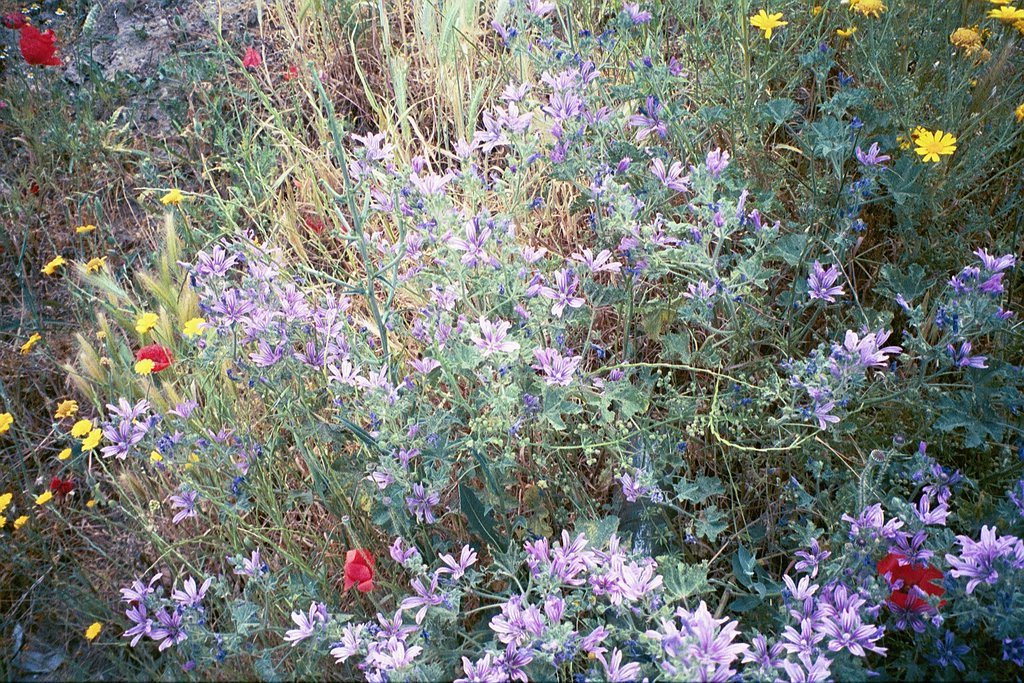
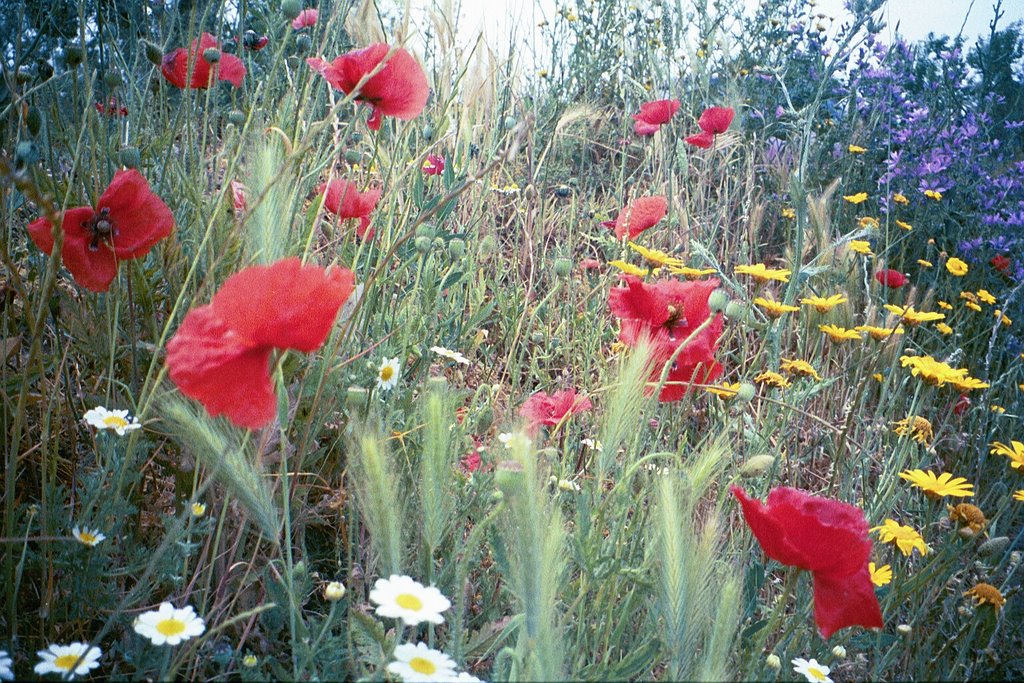
Even I don’t know what will impress me, or astound me or make me gasp at it’s beauty or it’s magnificence as I wander on my journeys – whether around the globe or around the corner. One of the magical moments on the Ring of Kerry was to turn a corner and find we were literally driving straight towards the foot of a rainbow – we kept expecting a leprechaun to appear on a pot of gold – then the sun went behind a cloud. Another time, three years earlier we got lost on backroads between Pompeii and Bari, stopped to check a sign - and saw these wildflowers beside the road. Beauty and art are all around us when you take the time to notice it.


I do tend to agree with Picasso when he said “Museums are just a lot of lies, and the people who make art their business are mostly imposters. We have infected the pictures in museums with all our stupidities, all our mistakes, all our poverty of spirit. We have turned them into petty and ridiculous things. Pablo Picasso”

That’s not to say that I don’t also wander through, and enjoy, museums and galleries. But when I do, I tend to look at the paintings others don’t, or look at the way they built the museum instead of what’s in it. So, I didn’t go to a single city with the intent of seeing it’s museum – yet I’ve probably been inside more than many scholars.

Of course, as a youth I spent hours in the Sydney and Melbourne Museums, mainly in the archeological and science sections. Somehow, over the past four years, I’ve stumbled across these, to name just some:

The Getty, in California
The Prado, Madrid
Vienna Museum
The Louvre
Musee D’Orsay
The British Museum
The Ashmolean, Oxford

Those are accepted as some of the great museums of the world. Yet, while I enjoyed them, the ones that stick in my memory were mainly smaller, often generally unknown – or even tiny. Or not even Museums. Because sometimes an ancient place, simply by continuing to exist becomes both a work of art and it’s own museum to me. Places like these:

The Far East Museum in the manor at Zbraslav, south of Prague. And the 16th and 17th European paintings/murals on the walls and ceilings there.
The small Greek Museum by the amphitheatre at Epidaurus.
Versailles.
The mosaic floor of the Cathedral restored from the mud at Aquileia.
The buildings of Pisa, Florence and Venice. To me those buildings were so much more impressive than the art they contained.
The Aya Sofia and the mosaics in it.
The Alhambra and Generalife.
Pompeii.
The Forum.
The Acropolis.
Radicofani.
The Vatican.
Tiny town museums, like the one in northern Vermont all about Ethan Allen, or the one in Prescott Canada about the boom years as a port – before the Seaway killed it.


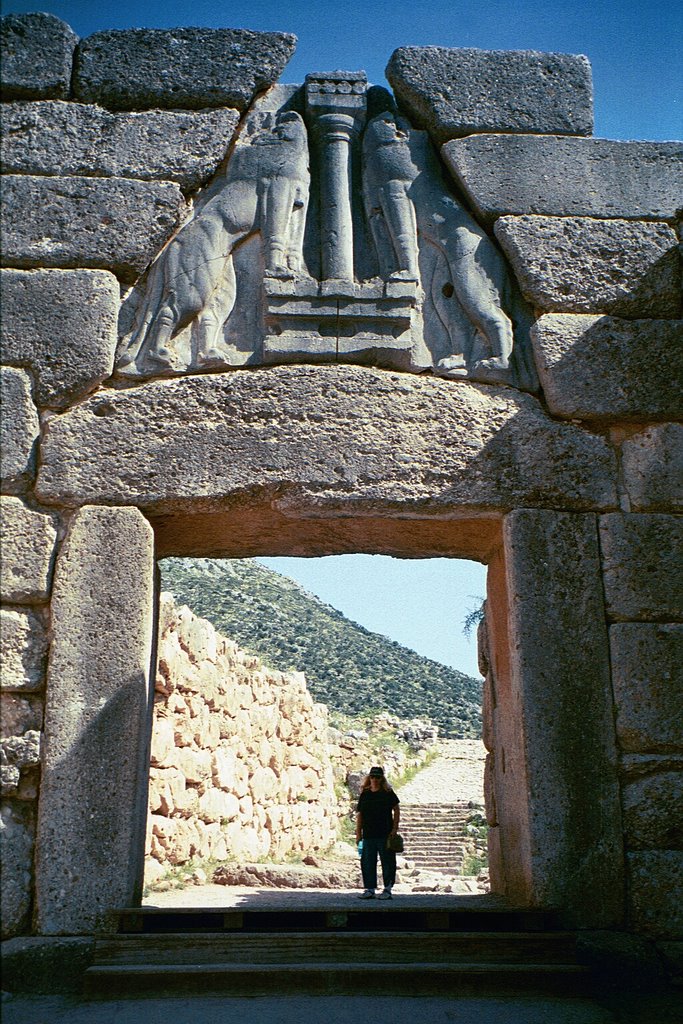
The list goes on and on: the town of Trier, the Budapest Citadel Museum, Nordlingen; it’s part of why I travel. You can send a Rembrandt to Sydney for display – but you can’t send the Lion Gate from Mycenae, or sit alone above those mighty ruins for an hour or two and ponder on the past. Or do the same at Auschwitz.

Maybe that will explain why we passed through Florence without attending a single gallery - and the only museum I went to there was the exhibition of models of DaVinci's great inventions.
Yeah - call me a philistine.

Cheers, Alan

The journey starts here: Brisbane to Singapore